A week of streets, textures, and urban reflections
First Impressions: The “Camden Image” Gap
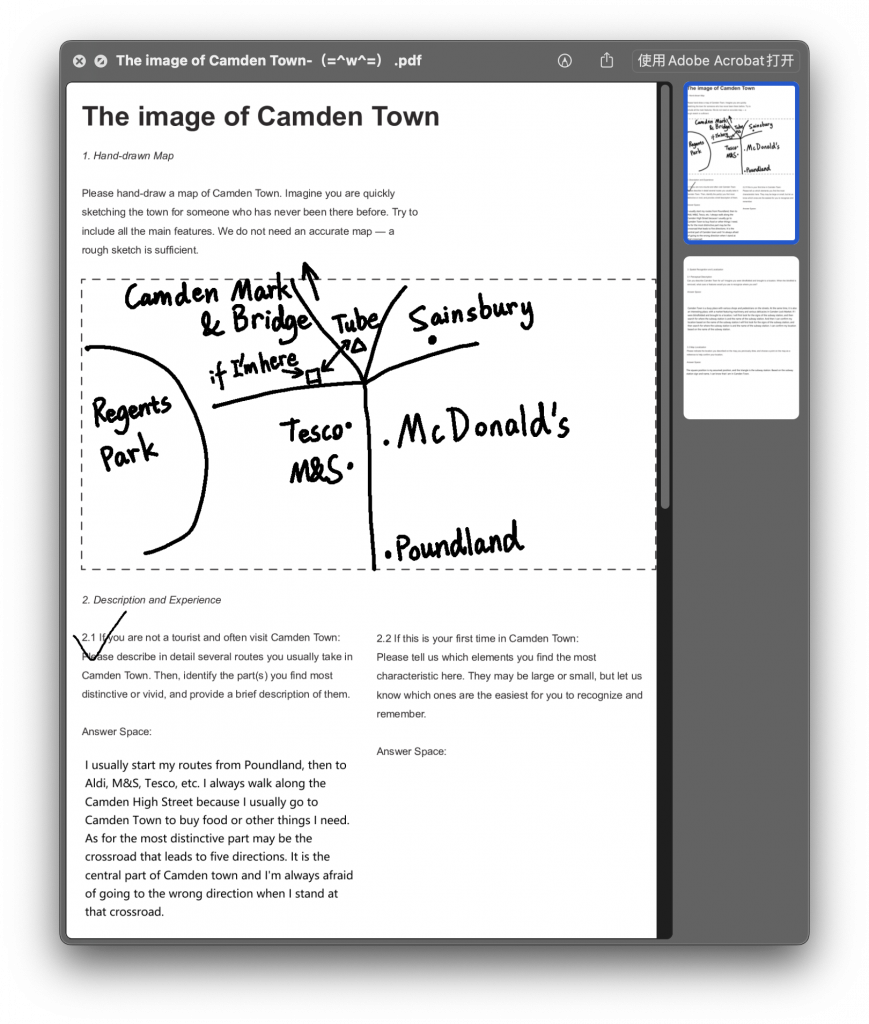
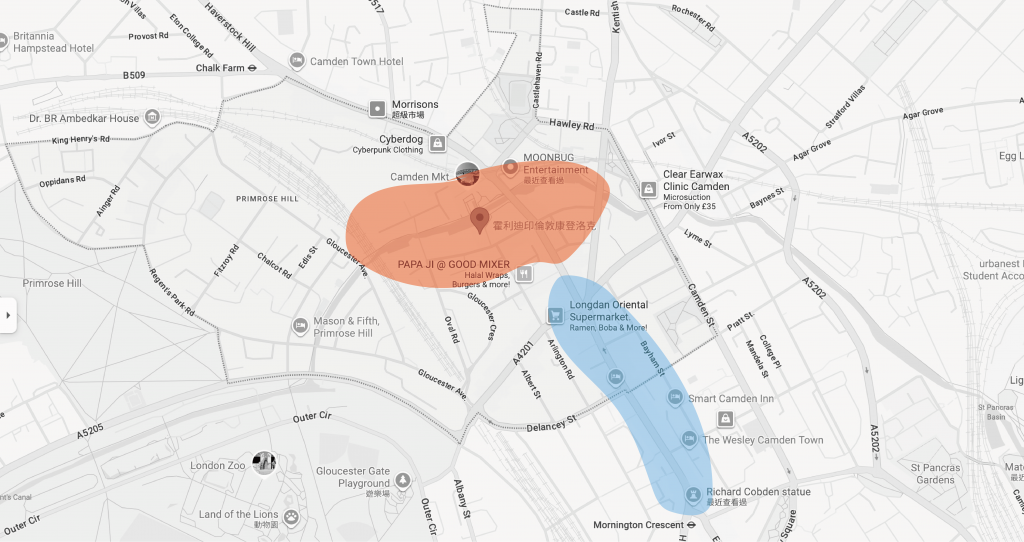
Based on last week’s map research, I realized something curious:
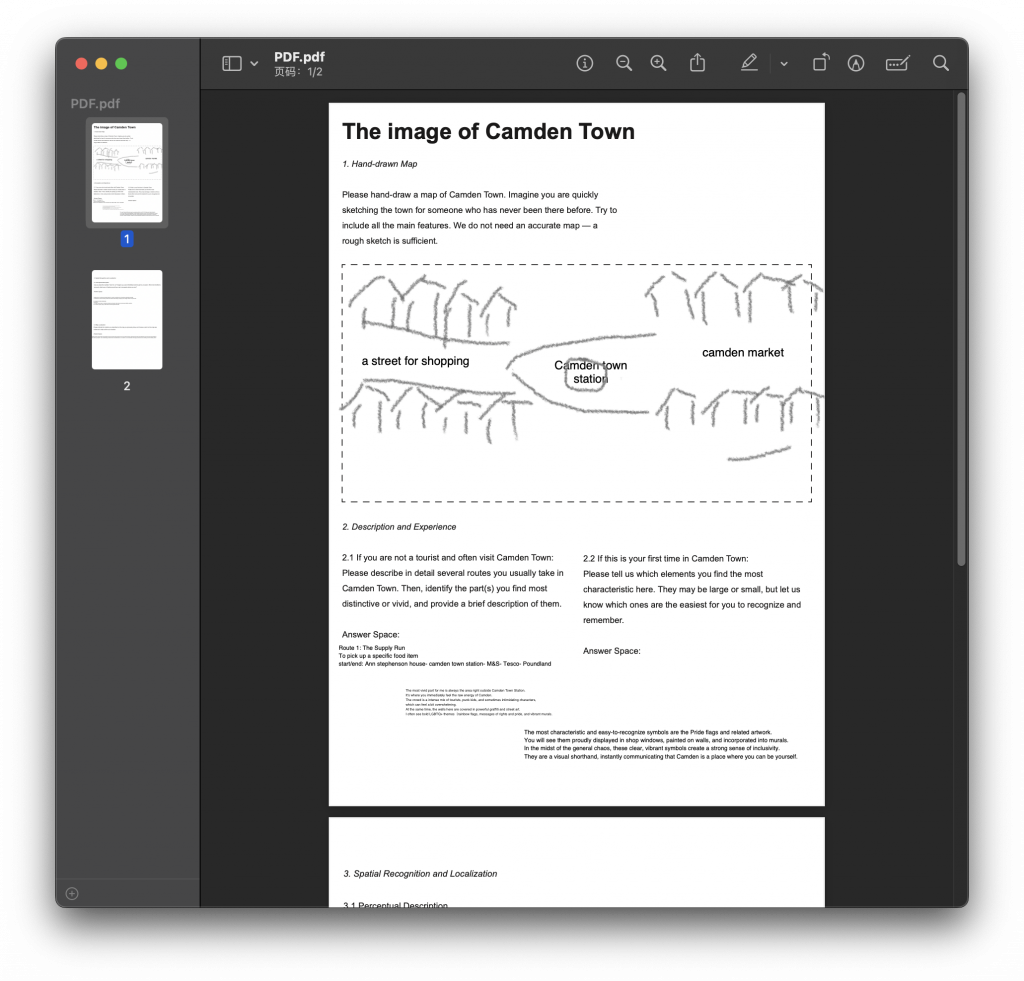
my mental image of Camden Town is basically just Camden High Street (・o・).
However, on Google Maps, Camden Town actually covers a much larger area.
So, I created a short survey to ask others how they perceive Camden Town.
One respondent lives nearby, and two had visited the area with me.
Interestingly, their perceptions overlapped almost completely — all centered on Camden High Street.
Compared to that main street, the surrounding neighborhoods and parks left much weaker impressions (・・;)。

Walking Experience: High Heels on Cobbles
Then I started to wonder: why does this one street define Camden Town’s identity?
That day, I happened to wear heels and walked from the Richard Cobden Statue to the Camden Lock Bridge.
My biggest takeaway? The road near the bridge is definitely not friendly to heels .
On my way back, I began paying attention to the pavement materials.
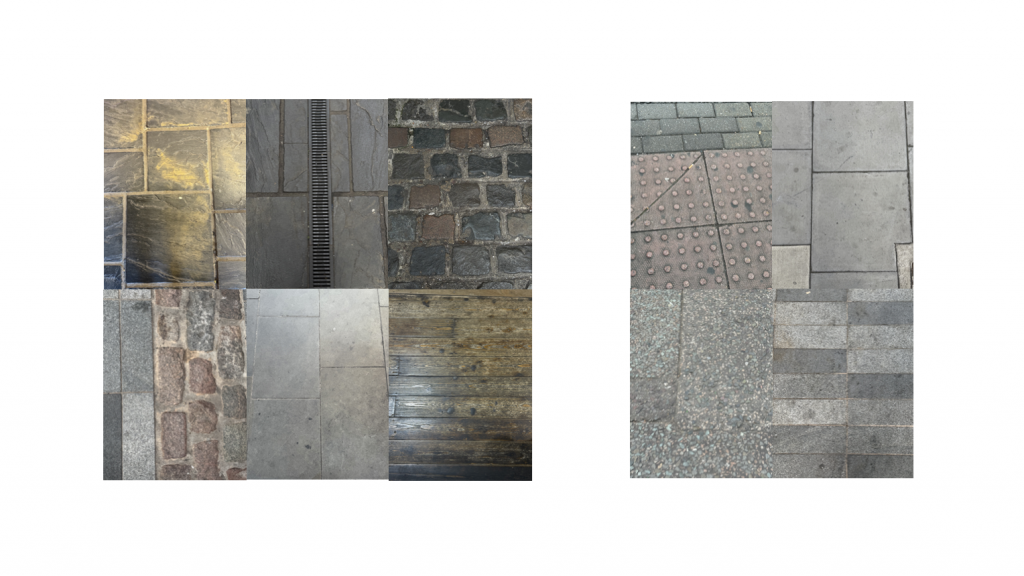
Around Camden Market, the surfaces were much richer — York stone, cobblestones, granite.
Meanwhile, the sidewalks were patchy, like layers of repair over time.
This mixture of textures and repairs seems to reflect Camden Town’s gradual gentrification.
Across the street, at Water Lane, the new shopping complex had pristine, modern materials — polished, uniform, and new.
Graffiti and Consumption: When Subculture Becomes a Brand
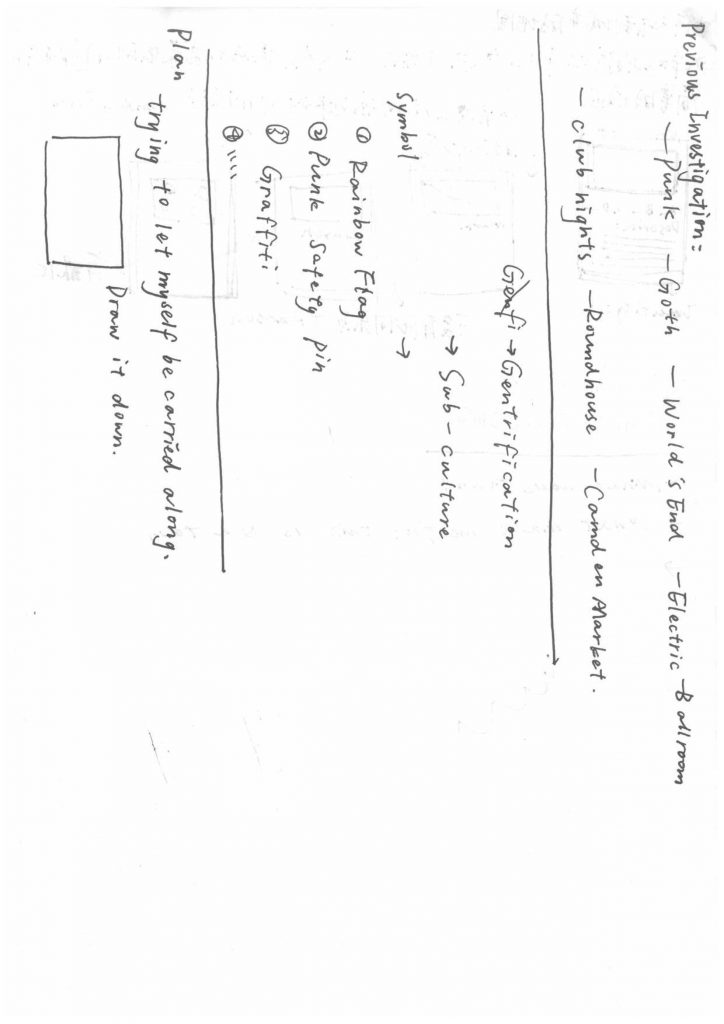
Beyond pavements, I also observed the merchandise and alternative cultural elements.
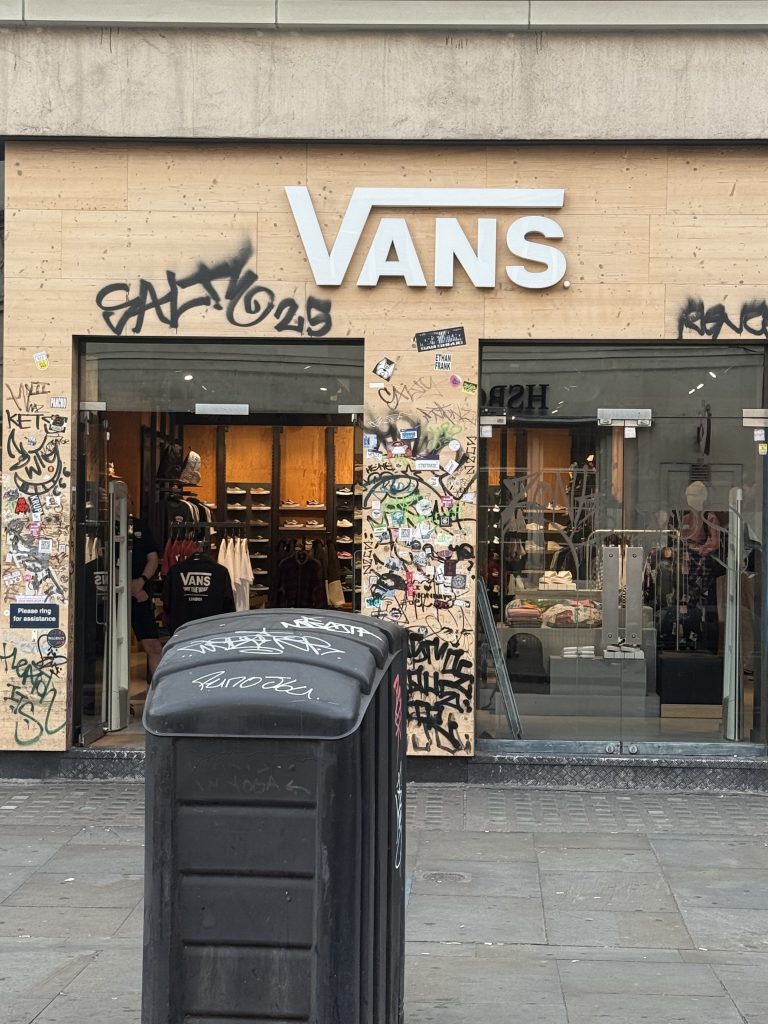
One striking feature is the graffiti art running along the entire Camden High Street.
Yet, once graffiti enters Camden Market, it transforms into a consumable symbol.
Brands like Vans and Stussy (both mid-luxury) use graffiti as a core design motif.
In these contexts, graffiti loses its original DIY street spirit.
It becomes aestheticized and commercialized — only to return to the streets again, accepted and imitated by the public.
A curious cycle of cultural feedback.
Small Details: Life Between the Cracks
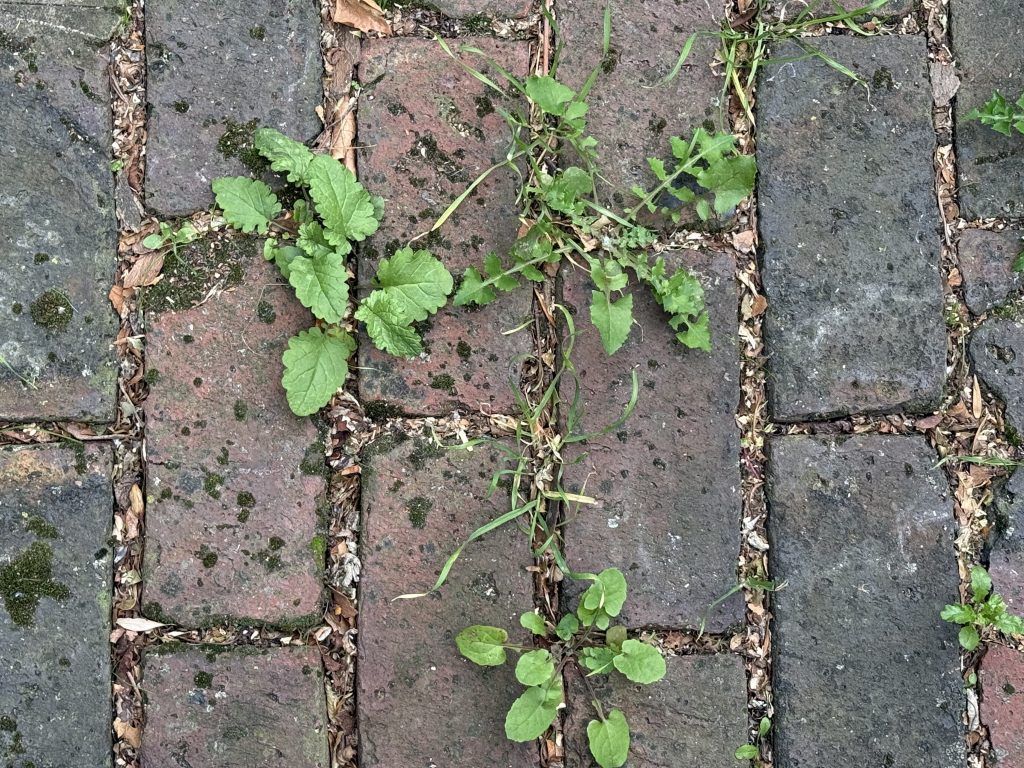
Walking through the residential parts of Camden Town, I noticed tiny plants growing through cracks in the pavement.
It’s something you’d never see on a polished pedestrian street — and somehow, that small wildness felt oddly touching .
A Curious Discovery: The Glass Bricks
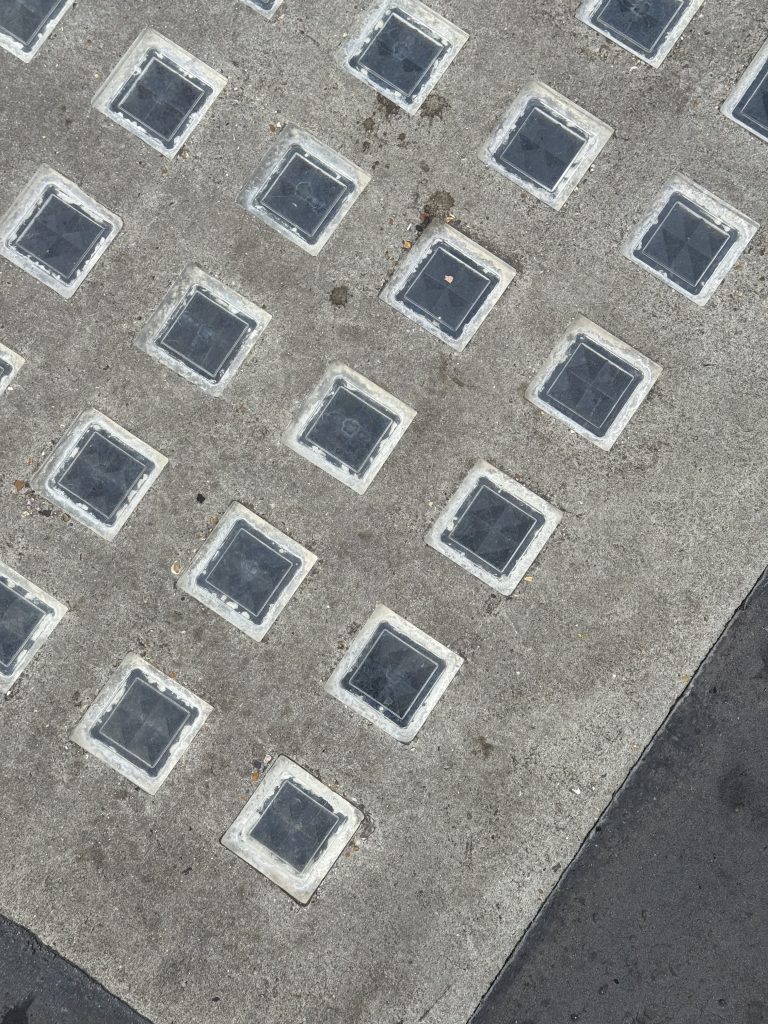
Later, I asked AI (hehe) what those glass blocks on the ground were.
They’re called light wells, designed to bring daylight into basement spaces (how clever! (≧▽≦)).
In Camden Town, though, they seem to be more modern — some even have company names on them.
It made me wonder : could the expansion of basement spaces be linked to the rising population in Camden?
Fascination with Materials and Texture
After learning more about London’s road renovations, I became fascinated by the texture of street materials.
At first, I thought about using rubbings to capture these surfaces.
But the results felt too flat — something was missing(´・_・`)。
So I returned to my original observation: what caught my attention was the unevenness near the Lock Bridge.
That sense of surface depth.
I needed a medium that could better express relief and texture.
I decided to use aluminum foil to sculpt the variations in pavement surfaces.
But during the process, I realized foil was too fragile to preserve.
So instead, I documented the results through photography.
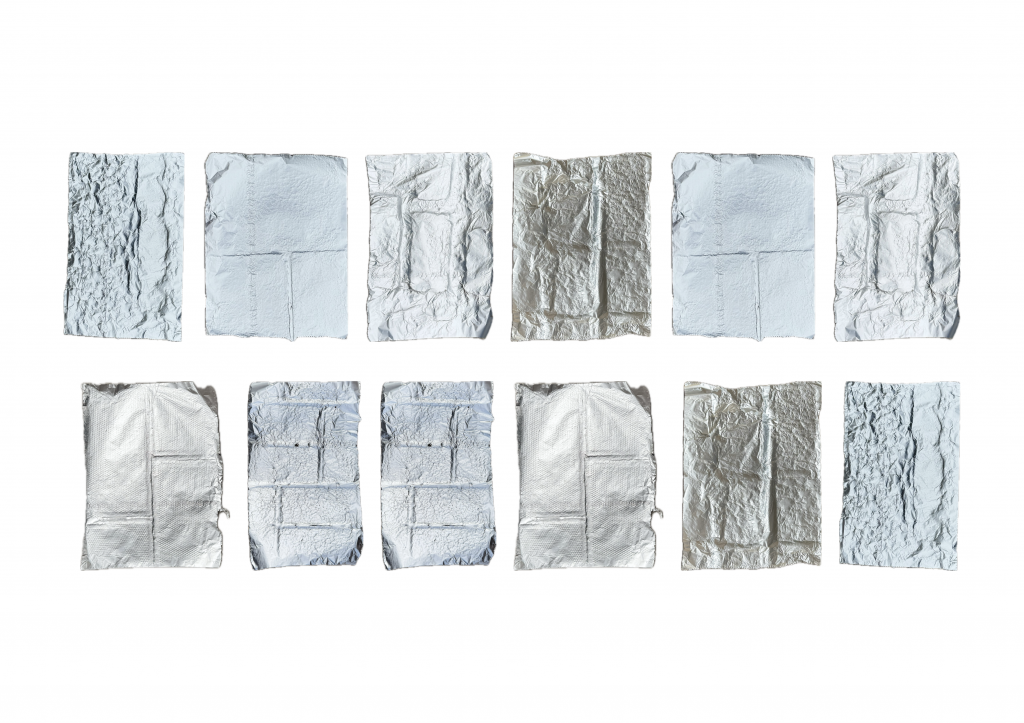
Smooth vs. Rough: The Dialogue of Urban Materials
New materials such as granite, York stone, and asphalt improve mobility and efficiency,
while the traditional cobbled streets near Camden Lock Bridge preserve a sense of historical texture (´∀`)。
I also started treating graffiti as part of the “surface” — along with cigarette butts, plastic bottles, and fallen leaves.
I experimented with different ways to record them, like printing and rubbing.
But, honestly, some things couldn’t be captured at all (like someone else’s cigarette butt…).
So what I ended up printing were… mine and my friend’s (lol).
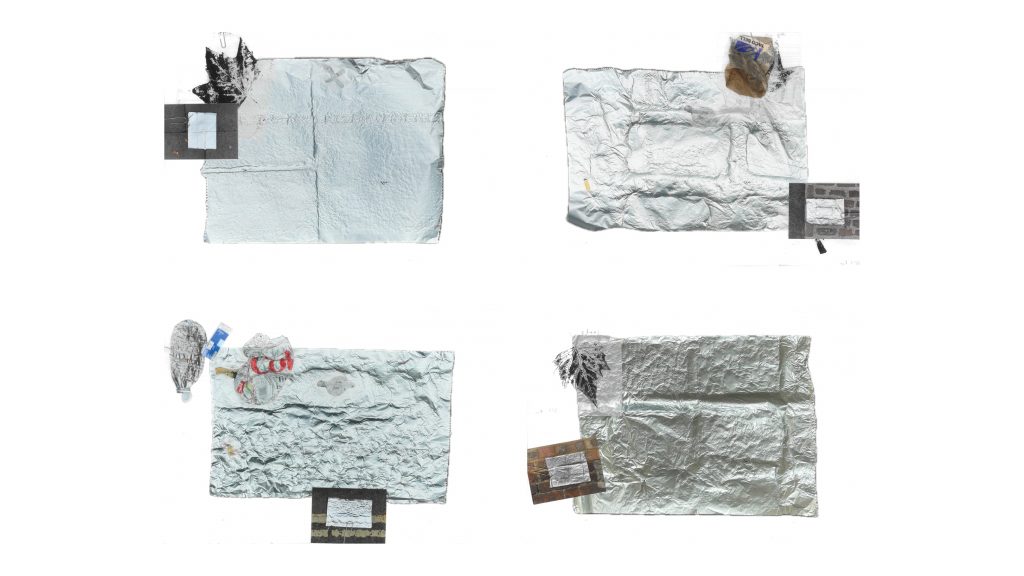
Camden Town as a “Smooth City”
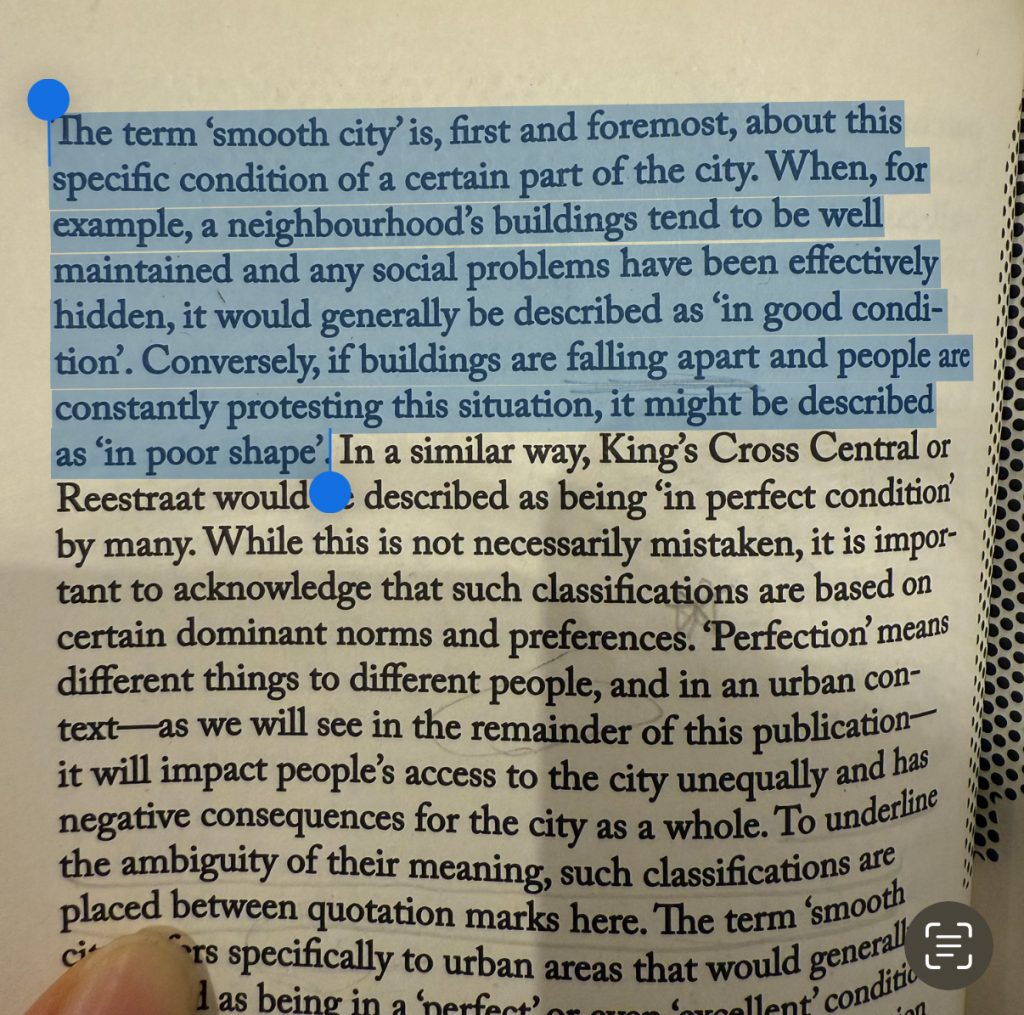
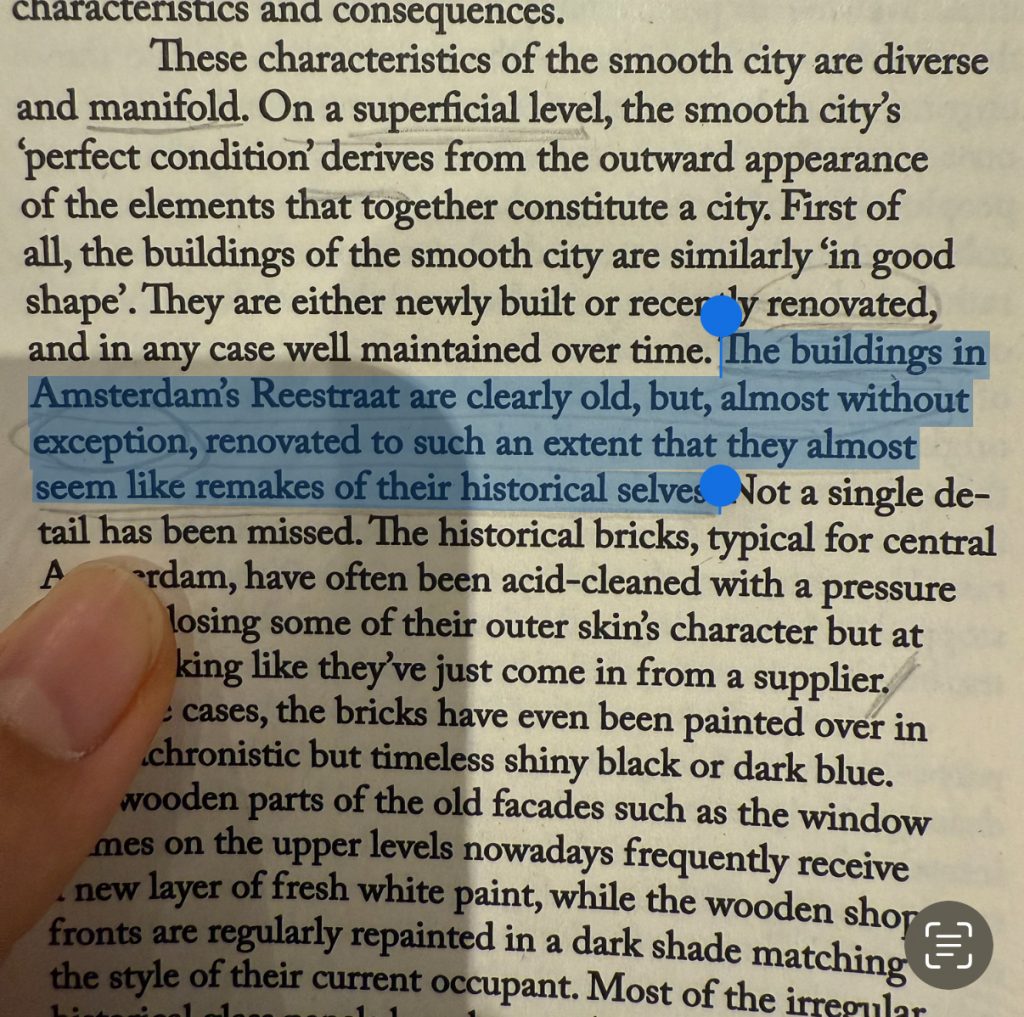
After a week of observations, I feel Camden Town is like a miniature version of what the book calls a Smooth City.
And it’s not just about “smooth roads” (•‿•).
In the book Smooth City, the author discusses Reestraat in Amsterdam and King’s Cross in London —
two very different yet related examples of urban “smoothness.”
Both places preserve their historical aesthetic, but the materials are brand new, carefully maintained, and selectively displayed.
Both are deeply class-coded spaces.
Historically, Camden Town became a hub for alternative culture because of its low rent,
which attracted musicians and artists.
Now, however, the area primarily serves tourists — a higher-spending demographic.
The “perfection” of Smooth City means different things to different people:
for long-term residents, it represents a loss — a fading of memory and diversity;
for tourists, it’s a polished place to stay for 3 or 4 hours.
Reflection: Freedom, Fines, and the Street
This week’s research made me rethink what “authentic urban space” means.
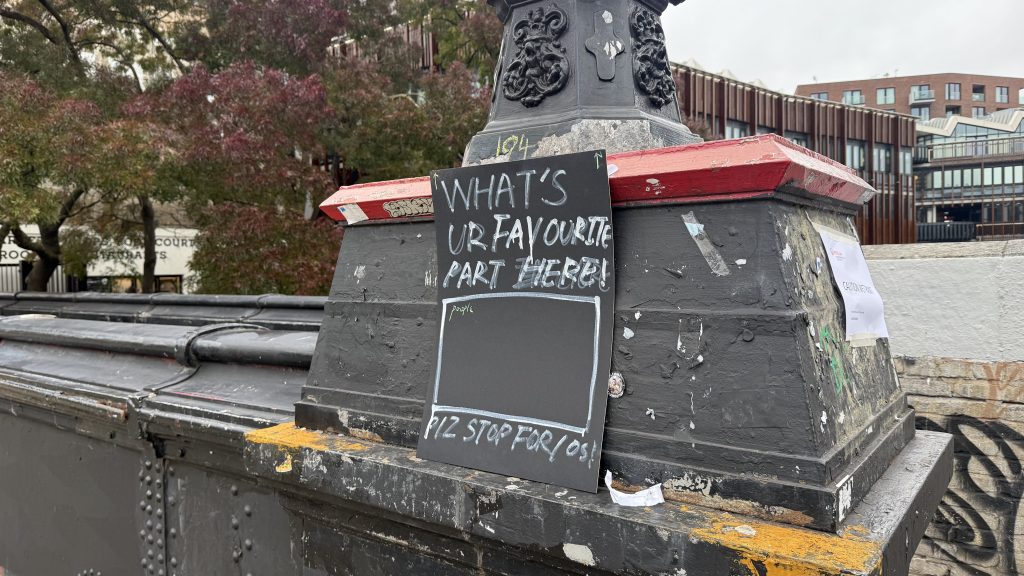
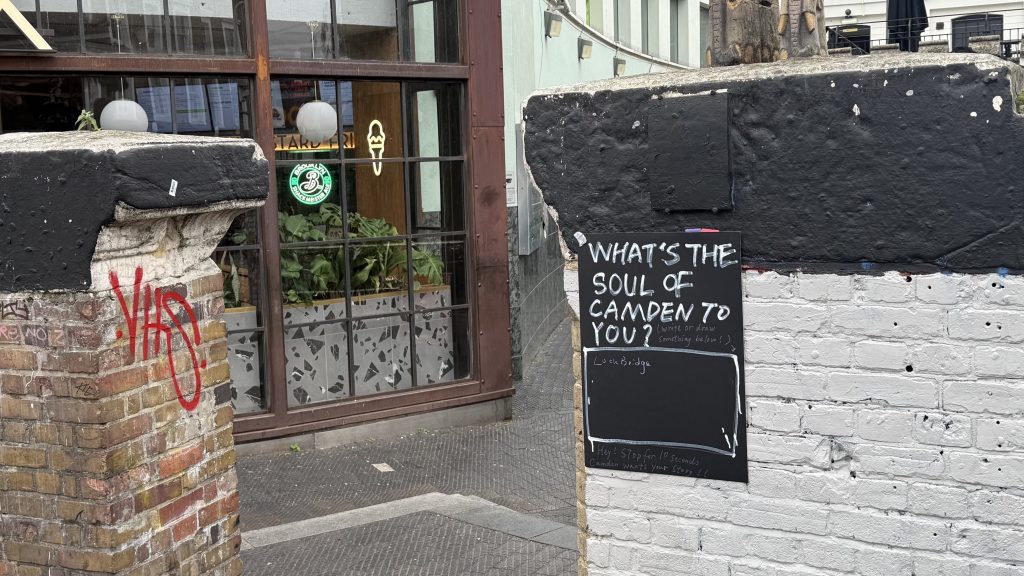
I tried using an open research method — I designed two posters and placed them on the bridge,
hoping people would write their comments.
But while putting them up, someone warned me I might get fined ,
so I gave up on the idea.
Maybe Camden Town really isn’t the same kind of open, creative space it once was(´・ω・`)。
Response
- Introduction
My exploration begins with the literal meaning of the chosen area: “Town.” Fundamentally, a town is a political and administrative unit, a concept defined by its jurisdiction, situated above a village. Yet, if we strip away this administrative framework, how do we define the essence of a “Town”? A similar inquiry applies to “The Street.” Perec suggests that traffic patterns can help identify an area, as they often loosely align with administrative boundaries. While practical, I believe our recognition of a place can be more immediate and sensory, grounded in direct experience rather than abstract lines on a map. This perceptual understanding, formed through interaction and memory, warrants deeper reflection. What constitutes the real, lived boundaries of a place in the minds of those who inhabit or pass through it?
- Process
To investigate this, I conducted a study inspired by Kevin Lynch’s experimental methods in The Image of the City. I asked students, both residents and visitors of Camden Town, to draw maps from their mental image of the area. Comparing these sketches with the official boundaries on Google Maps revealed a clear pattern: their mental images were intensely concentrated along Camden High Street, while most residential areas and side streets left minimal impression. This prompted a new question: what specific elements along Camden High Street anchor observers’ memories? In The Town, Perec describes his own mental map—devoid of street signs or numbers—shaped purely by personal memories and interactions. This aligns with Lynch’s theory that environmental images emerge from a two-way interaction between the observer and their surroundings. In this light, Camden High Street can be understood as the part of Camden Town that most actively engages with people, forming the core of its collective image.
- Form
Walking repeatedly along High Street, I sought to identify landmarks capable of engaging an observer, whether visually or through other senses. I initially focused on graffiti and buildings as visual anchors. However, I found that privatized architecture and ephemeral graffiti often obscured the deeper history that has shaped modern Camden. In Perec’s The Street, a street is defined as a boundary that divides and defines an area. Unlike buildings, changes in a street can signify the transformation of an entire neighborhood. This became tangible underfoot. Walking in high heels, I acutely felt the variations in pavement materials. Near Lock Bridge, the surface was uneven, a patchwork of asphalt and preserved York stone with some cobblestones intact. Further away, the pavement transitioned to uniform granite, designed for efficient commuting. Can these surfaces be compared? Inspired by Varda’s The Gleaners and I, which contrasts past and present to reveal social and gender issues amid urbanization, I realized that comparing Camden’s historical and contemporary street surfaces does more than trace urban change. It symbolizes the process of gentrification, where the subtle shift underfoot becomes a microcosm of broader social transformation—a material testament to the “smooth city” ideal.
(486 words)
Reference List
Agnes Varda (2015). The Gleaners & I (2000) Documentary) Full Movie HD Quality. Dailymotion. Available at: https://www.dailymotion.com/video/x2wzh1z.
Boer, R. (2023). Smooth City. Valiz.
Georges Perec, Morris, S. and Sturrock, J. (1974). Species of spaces and other pieces = Pigeon reader. Acklam: Information As Material.
Lynch, K. (1960). The Image of the City. London: The MIT Press.